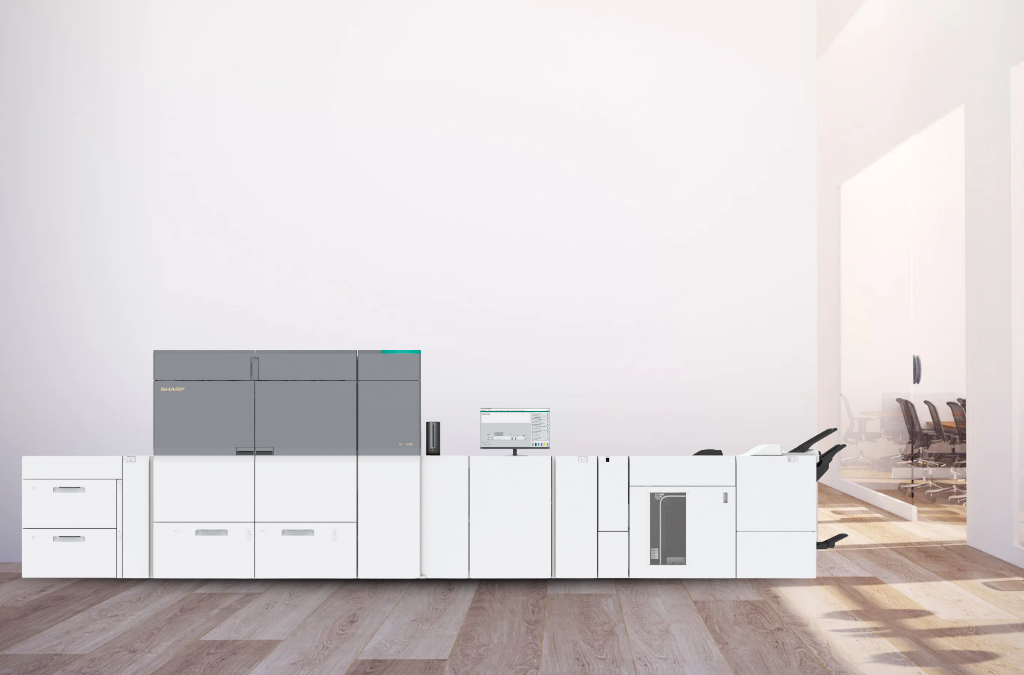
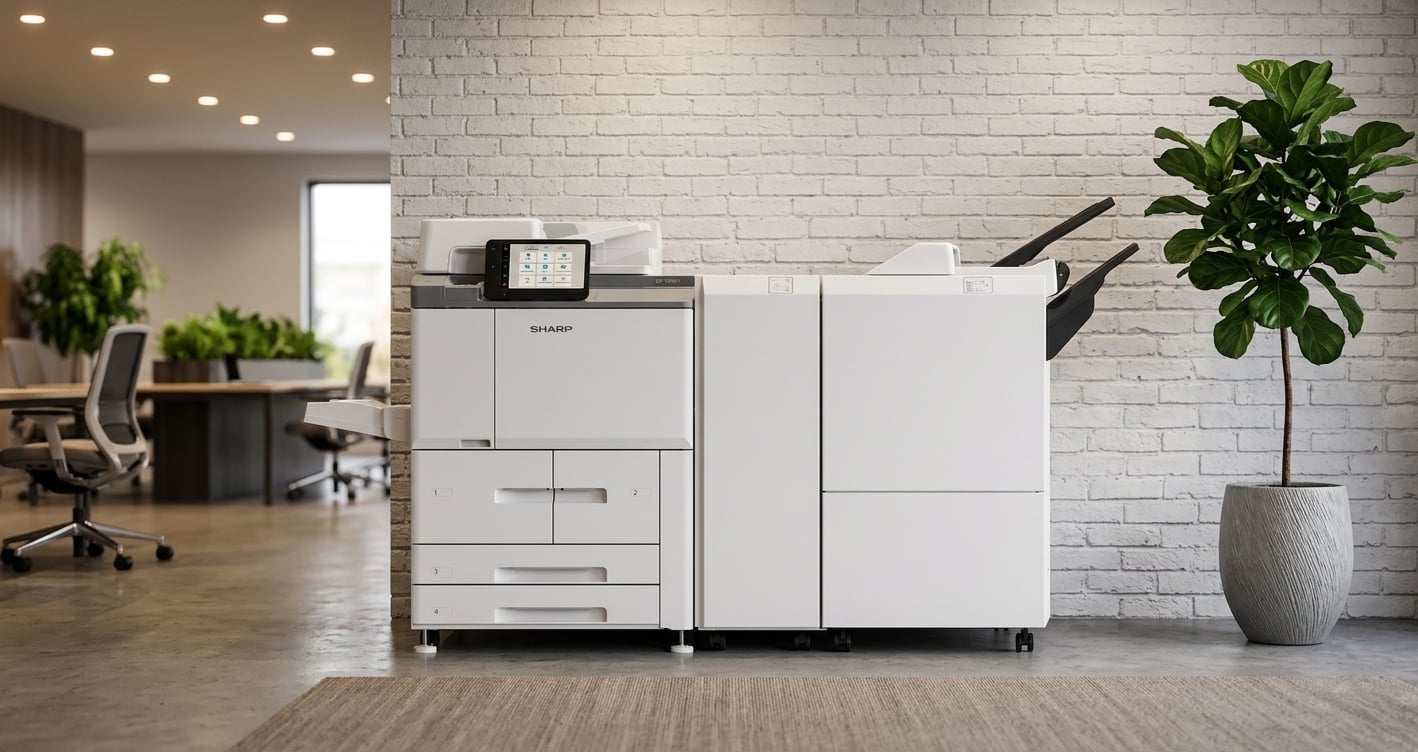
Production printing often involves more than transferring ink or toner onto a sheet. Printed materials may also need to be trimmed, creased, folded, or bound before they are ready for distribution or use. Managing these finishing steps efficiently is important for maintaining productivity and meeting production deadlines.
Inline finishing integrates selected finishing processes into the printing workflow, helping businesses reduce manual handling and move printed materials through production more efficiently. By combining printing and finishing operations, businesses can streamline workflows, improve production consistency, and reduce the time required to prepare finished materials.
Key Takeaways
- Inline finishing combines printing and post-print processes
- Finishing can include folding, trimming, creasing, and binding
- Automating finishing can reduce manual handling
- Finished materials can move through production more efficiently
- The right finishing configuration depends on the types of materials being produced
What Is Inline Finishing?
In commercial printing, finishing refers to the processes used to prepare printed materials for their final use. These processes may include trimming, creasing, folding, and binding, depending on the type of document being produced. Finishing is an important part of the production workflow because it helps transform printed sheets into polished, usable materials that meet the project’s specifications.
Inline finishing integrates compatible finishing operations directly into the printing workflow, allowing printed materials to move from the press to the finishing stage without requiring separate handling between each process. For example, a production system may print and fold brochures as part of one integrated workflow, depending on its equipment and configuration. This approach can reduce manual handling and simplify production for jobs with compatible finishing requirements.
Offline finishing, by comparison, takes place separately from the printing process, often using dedicated finishing equipment after the printed materials leave the press. Although this approach may require additional handling, it can offer flexibility for specialized jobs or finishing requirements that are not supported by an inline configuration. The most suitable approach depends on the equipment available, the type of materials being produced, and the needs of the production workflow.
What Finishing Processes Can Be Completed Inline?
Inline finishing can combine several post-print processes within a production workflow, depending on the press and its compatible finishing equipment. These capabilities help transform printed sheets into completed materials without requiring every task to be performed separately. Common inline finishing options include creasing, trimming, folding, and binding.
Creasing
Creasing creates a controlled indentation in a printed sheet to help it fold neatly along a specific line. This process is particularly useful for heavier paper stocks and printed materials with substantial ink or toner coverage, where folding may cause cracking along the crease. When supported by the finishing system, inline creasing helps prepare materials for folding without requiring a separate manual step.
Trimming
Trimming removes excess paper from printed sheets to achieve the required dimensions. It can help create clean edges, remove unwanted borders, and ensure that finished materials meet the specifications of a print job. Inline trimming allows compatible production systems to incorporate this step into the workflow, reducing the need to move materials to separate trimming equipment.
Folding
Folding transforms printed sheets into formats used for brochures, mailers, folded flyers, and other business communications. Depending on the equipment configuration, inline folding can produce consistent folds as part of the production process. Integrating folding with printing can help streamline recurring jobs that require specific fold patterns and finished dimensions.
Binding
Binding joins printed pages to create booklets, catalogs, manuals, and other multi-page materials. Available methods depend on the finishing equipment and may include options such as saddle stitching or other binding techniques. When a production system supports inline binding, compatible printed pages can move through the workflow toward a completed document with less separate handling.
Other Finishing Options
Depending on the equipment, inline finishing may also support processes such as perforating, hole punching, or stacking and organizing printed materials. These capabilities can help prepare documents for distribution, filing, assembly, or additional production steps. Since finishing options vary by press and configuration, businesses should confirm equipment compatibility and available functions before selecting a system for specific applications.
How Does Inline Finishing Improve Production Printing?
Inline finishing can improve production printing by integrating compatible finishing operations into the same workflow as printing. Instead of moving printed sheets between separate machines or workstations for each step, businesses can process materials through a more connected sequence. This integration can reduce manual handling, simplify job coordination, and help production teams move materials toward completion more efficiently.
A typical production workflow with inline finishing follows these stages:
File preparation → Digital printing → Inline finishing → Finished materials
Each stage prepares the job for the next, from checking digital files and printing the design to trimming, folding, or binding the output as required. By connecting these steps, businesses can reduce unnecessary movement between workstations and limit the need for manual intervention between processes.
Inline finishing can also support greater consistency across recurring print jobs. When compatible finishing operations are integrated into a production system, materials can follow the same established process from one run to the next. This can help produce more uniform results, although output quality still depends on equipment settings, media selection, file preparation, and operator oversight.
Integrating finishing capabilities may also reduce reliance on separate equipment for certain jobs. Rather than routing printed sheets to an independent finishing station, businesses can complete compatible operations within the production workflow. The practical benefits depend on the press configuration, finishing requirements, and types of jobs being produced, so businesses should evaluate their existing processes before deciding which finishing approach best meets their needs.
Inline vs. Offline Finishing: What’s the Difference?
Inline and offline finishing differ in how finishing operations are integrated into the production process. Inline finishing connects compatible operations to the printing workflow, while offline finishing uses separate equipment to process printed materials after they leave the press. Each approach offers advantages depending on the job requirements and production setup.
| Inline Finishing | Offline Finishing |
| Finishing occurs within the integrated production workflow | Finishing takes place separately from printing |
| Reduces the need to move materials between separate processes | May require additional handling between processes |
| Can streamline recurring jobs with consistent finishing requirements | Can accommodate jobs requiring separate finishing equipment |
| Depends on the press and compatible finishing configuration | Allows finishing equipment to be selected independently |
| Suits compatible jobs that benefit from an integrated workflow | May suit specialized jobs or varied finishing requirements |
Neither approach is universally better. Inline finishing can simplify production when printing and finishing operations work well together, while offline finishing offers flexibility when jobs require specialized processes or equipment. Businesses should consider their typical print jobs, production volumes, equipment compatibility, and finishing requirements when deciding which approach best fits their workflow.
What Types of Print Jobs Benefit From Inline Finishing?
Inline finishing is well suited to recurring print jobs that require consistent finishing processes, such as folding, trimming, or binding. Integrating these steps into the production workflow can reduce material handling and help commercial printers process repeat orders more efficiently. Common applications include:
- Brochures and folded marketing materials: Printed pieces that require consistent folds and finished dimensions
- Booklets and multi-page documents: Materials that may require trimming, folding, or compatible binding operations
- Direct mail: Mailers that need specific folds, dimensions, or other finishing steps before distribution
- Business communications: Printed documents that require standardized finishing for professional presentation
- Recurring commercial print jobs: Repeat orders that benefit from a consistent, integrated production process
The suitability of each application depends on the press configuration, available finishing capabilities, media, and job specifications.
What Should You Consider When Choosing Inline Finishing?
Choosing an inline finishing setup requires evaluating your business’s print applications, media requirements, production volume, and existing equipment. The right configuration should support the finishing processes you use most often while fitting your current workflow and anticipated production needs. Before selecting an inline finishing system, consider the following factors:
- Print applications: Identify the materials you produce most often, such as brochures, booklets, direct mail, and business communications
- Media compatibility: Confirm support for the paper sizes, weights, and stock types used in your print jobs
- Finishing requirements: Determine whether you need creasing, trimming, folding, binding, or other finishing operations
- Production volume: Evaluate typical print quantities and how frequently jobs require finishing
- Equipment compatibility: Verify that your digital press supports the required finishing capabilities and configuration
- Space and workflow: Consider available floor space, integration with existing equipment, and any operator training requirements
Evaluating these factors can help you choose an inline finishing setup that meets your production requirements, supports consistent output, and integrates effectively with your existing operations.
Digital Press Finishing FAQs
Can inline finishing handle different paper stocks?
Inline finishing can support different paper stocks when the press and finishing equipment are compatible with the selected media. Paper weight, size, thickness, and surface characteristics can affect how materials move through finishing operations. Businesses should check equipment specifications to confirm that their preferred stocks can be processed reliably.
Does inline finishing require special equipment?
Yes, inline finishing requires a digital press configured to work with compatible finishing units or integrated finishing capabilities. The equipment needed depends on the processes involved, such as folding, trimming, or binding. Businesses should confirm which finishing options are available for their specific press model and configuration.
Can inline finishing support customized print jobs?
Inline finishing can support customized jobs when the required finishing operations are compatible with the equipment and production settings. However, jobs with unusual dimensions, specialized materials, or unique finishing requirements may need separate equipment or additional processing. Reviewing job specifications before production helps determine whether an inline setup is suitable.
What maintenance considerations apply to inline finishing equipment?
Inline finishing equipment requires routine care to help maintain reliable operation and consistent output. Depending on the system, this may include cleaning, inspecting moving parts, checking alignment, and following manufacturer-recommended service schedules. Keeping the press and finishing equipment in good condition can also help reduce workflow interruptions.
How can businesses determine whether inline finishing is worth the investment?
Businesses should compare the cost of compatible equipment with their current finishing workflow, including material handling, production requirements, and reliance on separate finishing machines. Inline finishing may offer greater value when jobs repeatedly use supported finishing processes and fit the system’s capabilities. Reviewing typical job volumes, operational needs, and future production plans can help businesses assess whether the investment makes sense.
Streamline Production From Print to Finished Product
Inline finishing can help businesses streamline production printing by integrating compatible finishing processes into the printing workflow. By bringing operations such as trimming, folding, creasing, and binding together, businesses can reduce manual handling, simplify production steps, and move printed materials toward completion more efficiently. The right setup depends on the types of materials produced, finishing requirements, and equipment compatibility.
At Platinum Copier Solutions, we help businesses evaluate production printing technology based on their application needs, print volumes, and workflow goals. Our team can help you explore printing and finishing solutions that support your operations and align with your business requirements.
If your business is looking to improve its production printing workflow, request a quote to discuss your needs and explore solutions tailored to your printing environment.

Kimberly Gonzalez founded Platinum Copier Solutions in 2007 after building her career in the copier and office equipment industry, which began at just 19 years old, selling Xerox copiers. Her early hands-on experience sparked a lifelong passion for document systems and office technology, ultimately inspiring her to launch her own company. As the 100 percent owner, Kimberly continues to lead Platinum Copier Solutions with a clear vision and commitment to quality.