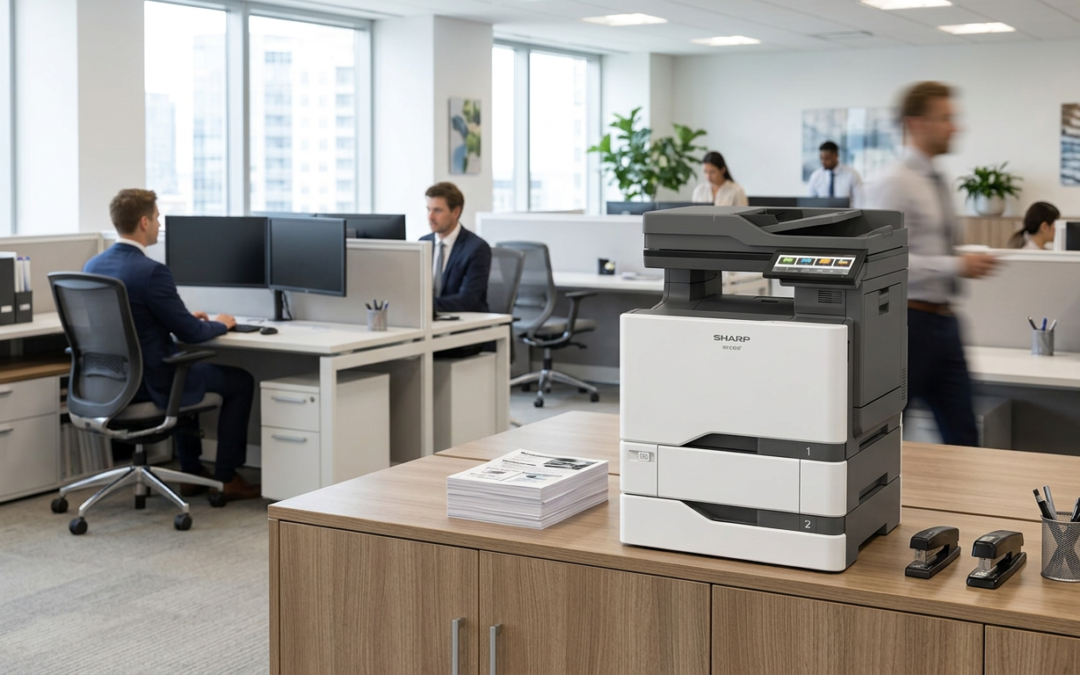
Managing printers across a business can involve more than replacing toner or fixing equipment when it breaks. Without a clear process, businesses may deal with inefficient devices, unexpected downtime, rising printing costs, and limited visibility into print usage. The managed print services process gives businesses a more organized way to assess, manage, monitor, and improve their print environment.
A managed print program takes a proactive approach to everyday print management. It begins with evaluating your current environment and continues with printer optimization, monitoring, supply management, maintenance, and regular performance reviews.
Understanding how the process works can help you determine what to expect and how it can fit into your business operations. In this article, we’ll walk through the key stages of the managed print services process and explain how each one supports a more efficient print environment.
Key Takeaways
- The managed print services process begins with an assessment of your current print environment
- Printer fleet optimization helps ensure your equipment matches your business needs
- Monitoring provides ongoing insight into device performance and print usage
- Automated supplies and maintenance help keep equipment running efficiently
- Regular reporting helps identify opportunities to improve your print environment
What Is the Managed Print Services Process?
The managed print services process is a structured approach to managing a business’s printers, copiers, supplies, and print activity. Rather than waiting for equipment problems or supply shortages to disrupt operations, businesses use ongoing monitoring and management to stay ahead of potential issues. Together, these stages create a more organized and predictable approach to managing business printing. The process typically includes these key stages:
| Process Stage | What It Involves |
| Assessment | Reviewing equipment, print volume, costs, and workflow needs |
| Fleet Optimization | Matching printers and copiers to business needs |
| Monitoring | Tracking device performance, usage, and supply levels |
| Ongoing Management | Handling supplies, maintenance, repairs, and security |
| Performance Reviews | Analyzing print data and making adjustments as needed |
1. Assessing Your Current Print Environment
The first step is understanding how your business currently handles printing. A provider reviews your equipment, print volume, usage patterns, printing costs, and workflow requirements to identify areas that may need improvement. This assessment creates a clear picture of your existing print environment and helps determine where changes could provide the most value.
The assessment may also look at which devices are used most often and whether certain printers are underused. Departmental needs can also vary, so understanding how different teams use printing equipment helps create a more effective strategy. By starting with accurate information, businesses can make better decisions about their print environment.
2. Optimizing Your Printer Fleet
Once your current print environment has been assessed, the next step is determining whether your existing equipment meets your needs. Some businesses may have too many devices, outdated printers, or equipment that is not located where it is most useful. Fleet optimization helps address these issues by matching the right devices to the right workflows.
This may involve replacing inefficient equipment, consolidating devices, or adding printers where they are needed most. Multifunction printers can also combine printing, copying, scanning, and other functions into a single device. The goal is to create a printer fleet that supports productivity without unnecessary equipment or expenses.
3. Setting Up Print Monitoring and Management
After the printer fleet is optimized, monitoring tools can provide ongoing visibility into print activity. These tools can track information such as print volume, device performance, toner levels, and error notifications. This information helps identify potential problems and gives businesses a better understanding of how their equipment is being used.
Monitoring also allows providers to respond to issues before they cause significant disruptions. Alerts can notify support teams when a device needs attention or supplies are running low. With consistent monitoring, businesses have greater visibility into their print environment and can make decisions based on actual usage data.
4. Managing Supplies, Maintenance, and Security
The managed print services process continues with ongoing management of supplies and equipment. Instead of relying on employees to monitor toner levels or place supply orders, automated systems can track usage and help arrange replacements when needed. This reduces the risk of running out of essential supplies during important print jobs.
Maintenance is also handled proactively to help keep equipment operating properly. Monitoring tools can identify potential issues, while scheduled maintenance and service support can address problems before they lead to extended downtime.
Security should also be considered as part of ongoing print management. Features such as user authentication and secure print release can help prevent unauthorized access to sensitive documents. These measures are particularly important for businesses that regularly print financial records, customer information, employee documents, or other confidential materials.
5. Reviewing Performance and Making Adjustments
The managed print services process does not end after equipment and monitoring tools are in place. Regular reporting provides information about print volume, device usage, supply consumption, and other performance metrics. Businesses can use this information to identify trends and determine whether their current print environment continues to meet their needs.
Print requirements can change as a business grows or workflows evolve. A department may begin printing more documents, new employees may be added, or certain equipment may become less useful. Reviewing print data regularly makes it easier to adjust the printer fleet, update workflows, and find new opportunities to improve efficiency.
Managed Print Services Process FAQ
What are the main steps in the managed print services process?
The process generally begins with an assessment of the business’s current print environment. It then moves into printer fleet optimization, monitoring, supply and maintenance management, and ongoing performance reviews. The exact process may vary based on the business’s equipment, print volume, and operational needs.
How does a provider assess a business’s print environment?
A provider typically reviews the number and types of devices, print volume, usage patterns, printing costs, and workflow requirements. They may also look at equipment performance and maintenance history to identify recurring issues. This information helps determine where changes could improve the business’s print environment.
How does print monitoring work?
Print monitoring uses software to collect information about connected devices and their activity. It can track print volume, device status, toner levels, and error alerts to provide greater visibility into the print environment. Providers can use this information to identify potential problems and respond to service or supply needs.
How are toner and other printing supplies managed?
Monitoring tools can track supply levels and notify the provider when toner or other consumables need to be replaced. Supplies can then be ordered before they run out, reducing interruptions caused by empty cartridges. This also saves employees from having to manually monitor and order routine printing supplies.
Does the managed print services process continue after implementation?
Yes, ongoing monitoring and management are important parts of the process. Providers can review print data, address equipment issues, manage supplies, and recommend adjustments as business needs change. Regular reviews help ensure the print environment continues to support productivity and efficient operations.
Improve Your Business Printing With a Managed Print Services Process
The managed print services process gives businesses a structured way to manage their print environment from initial assessment through ongoing optimization. Evaluating equipment, optimizing the printer fleet, monitoring performance, managing supplies, and reviewing print data can help create a more efficient and reliable approach to business printing.
As a managed print service provider in Houston, we help businesses improve their print environments with customized solutions, reliable equipment, and ongoing support. From assessing your current print setup to monitoring equipment and managing supplies, our team can help you create a print strategy that fits your business needs.
If you’re ready to take a more proactive approach to business printing, request a quote today to learn how Platinum Copier Solutions can help you improve efficiency, manage printing costs, and get more from your office technology.

Kimberly Gonzalez founded Platinum Copier Solutions in 2007 after building her career in the copier and office equipment industry, which began at just 19 years old, selling Xerox copiers. Her early hands-on experience sparked a lifelong passion for document systems and office technology, ultimately inspiring her to launch her own company. As the 100 percent owner, Kimberly continues to lead Platinum Copier Solutions with a clear vision and commitment to quality.